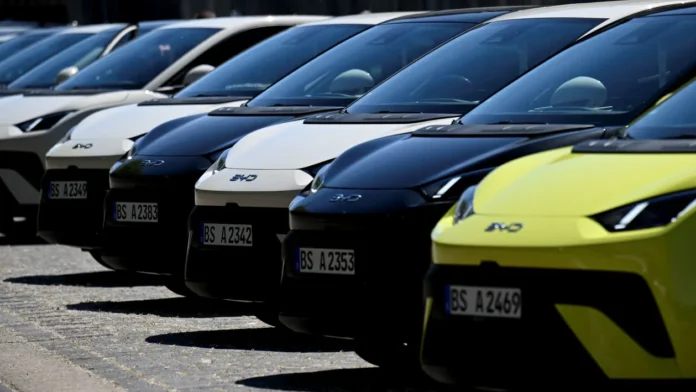
In a graceful and appreciative farewell, Chinese electric vehicle giant BYD has publicly acknowledged Berkshire Hathaway’s complete exit from its shareholding in the company, calling the move a routine investment decision.
This response comes just days after it was reported that Warren Buffett’s Berkshire Hathaway sold its remaining stake in BYD earlier this year. BYD confirmed the news via a post on the Chinese social media platform Weibo, where Li Yunfei, the company’s public relations executive, expressed gratitude to Buffett and his longtime business partner Charlie Munger for their years of support.
“In August 2022, Berkshire began gradually reducing its holdings of company shares purchased in 2008, and by last June, its stake had fallen below 5%,” Li wrote. He emphasized that “investing in stocks involves both buying and selling, which is completely normal.” The statement refrained from any hint of concern or disappointment, instead offering thanks and praise: “We are grateful for Charlie Munger’s and Warren Buffett’s recognition of BYD, as well as for the investment, support, and companionship over the past 17 years.”
Berkshire’s investment in BYD began in 2008 when it purchased a significant stake in the then lesser-known Chinese automaker for about $230 million. That bet paid off massively over the years, with BYD becoming one of China’s leading EV manufacturers, rivaling even Tesla in sales and market share. At its peak, Berkshire’s position in BYD was worth several billion dollars.
The gradual sell-off, which started in 2022, reflected a classic Buffett approach—buy early, hold long, and exit strategically. The complete exit marks the end of an era for BYD, but the company appears unfazed, viewing it as part of the normal cycle of long-term investing.
Li’s message also included a broader sentiment for all who continue to believe in the company: “Praise to all long-term believers!”
While Berkshire Hathaway has moved on, BYD’s future remains bright, fueled by continued innovation and expansion in both domestic and international markets. The company’s leadership expressed confidence in their trajectory, suggesting that Buffett’s early endorsement still resonates, even after his departure as a shareholder.
For Buffett watchers, the BYD exit serves as another example of how the Oracle of Omaha manages portfolio transitions—with patience, pragmatism, and a long-term perspective.

